
What a Hundred Winters Do to a Chimney Crown
New Jersey's freeze line doesn't cross once a winter and stop. At the weather stations nearest Bridgewater it crosses roughly a hundred times between October and April — and a crown with so much as a hairline crack lives through every one of them.
The short answer
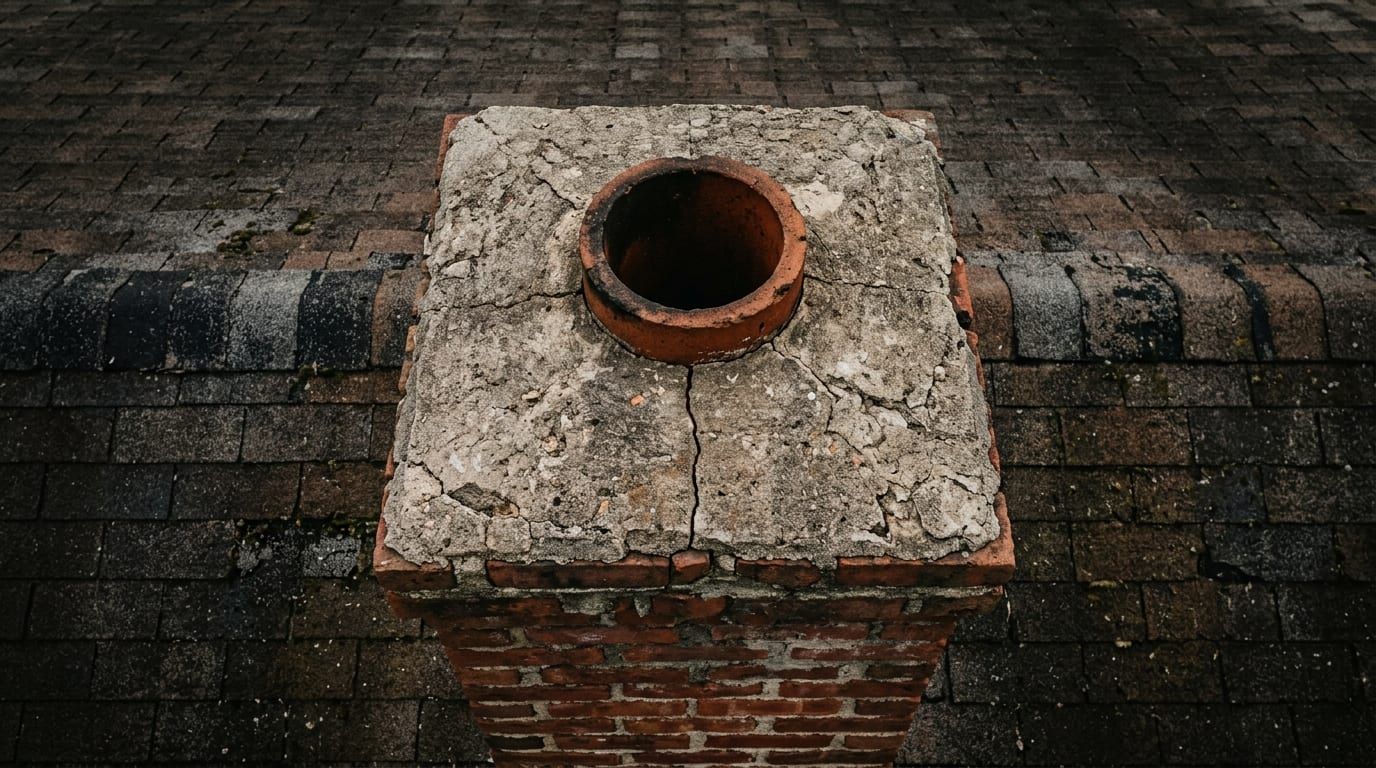
At the weather stations closest to Bridgewater, the air crosses 32°F roughly 107 to 117 times a year — not over a chimney's lifetime, in one season, every season (NOAA Climate Normals, 1991-2020, Somerset Airport and Somerville 4 NW). A sound crown shrugs that off. A cracked one takes on water on the way down through freezing and gets pushed open a little further on the way back up. Nobody's chimney needs a hundred winters to earn hundred-winters-style damage — in Somerset County, one winter can do it.
Three jobs, three parts, and one leak that keeps getting blamed on the wrong one
A masonry chimney is doing three separate jobs at once, and each job has its own hardware. Homeowners — and more than a few roofers — use the words interchangeably, which is exactly how a crown problem ends up quoted as a cap swap, or blamed on a roof that turns out to be sound.
- Crown — the sloped concrete or mortar cap across the masonry, built to throw rain clear of the brick below it
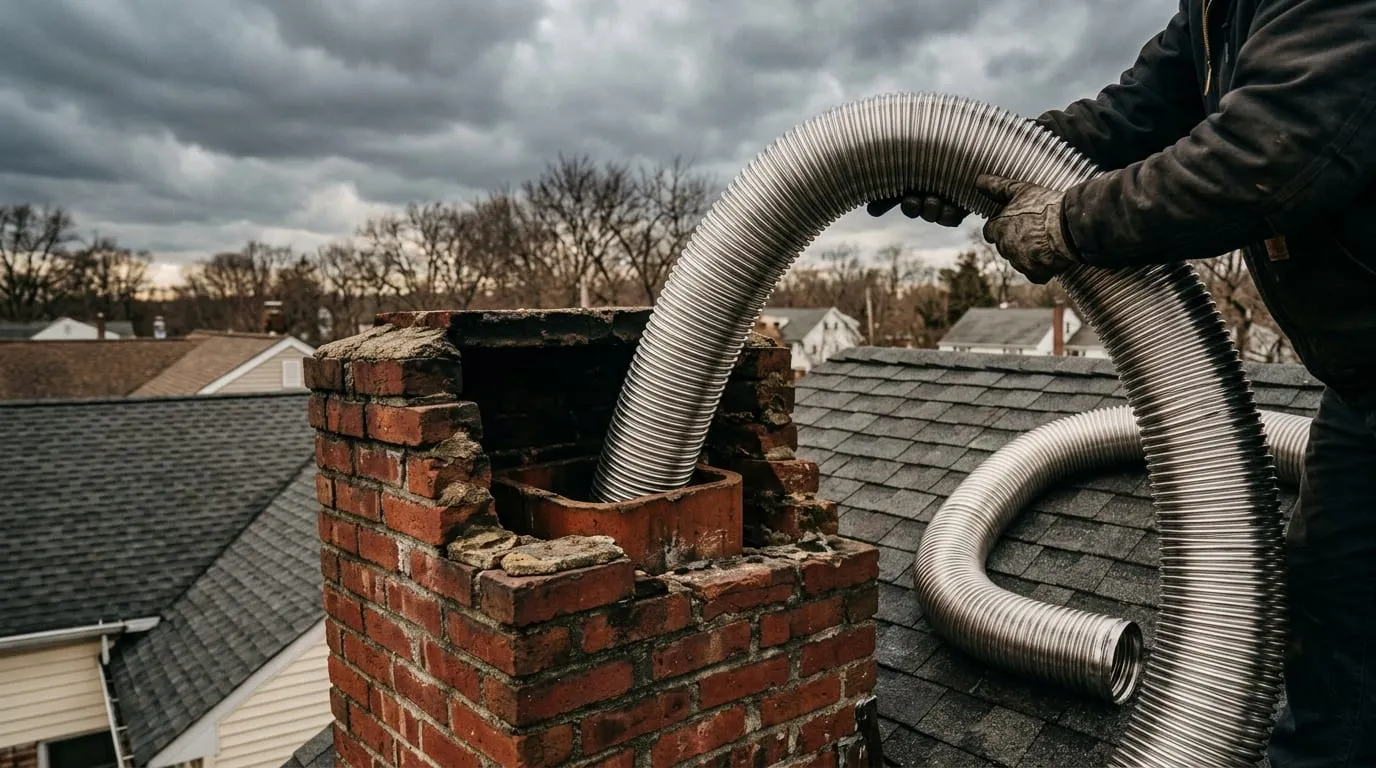
- Cap — the metal cover over the flue opening itself, keeping rain and wildlife out of the shaft
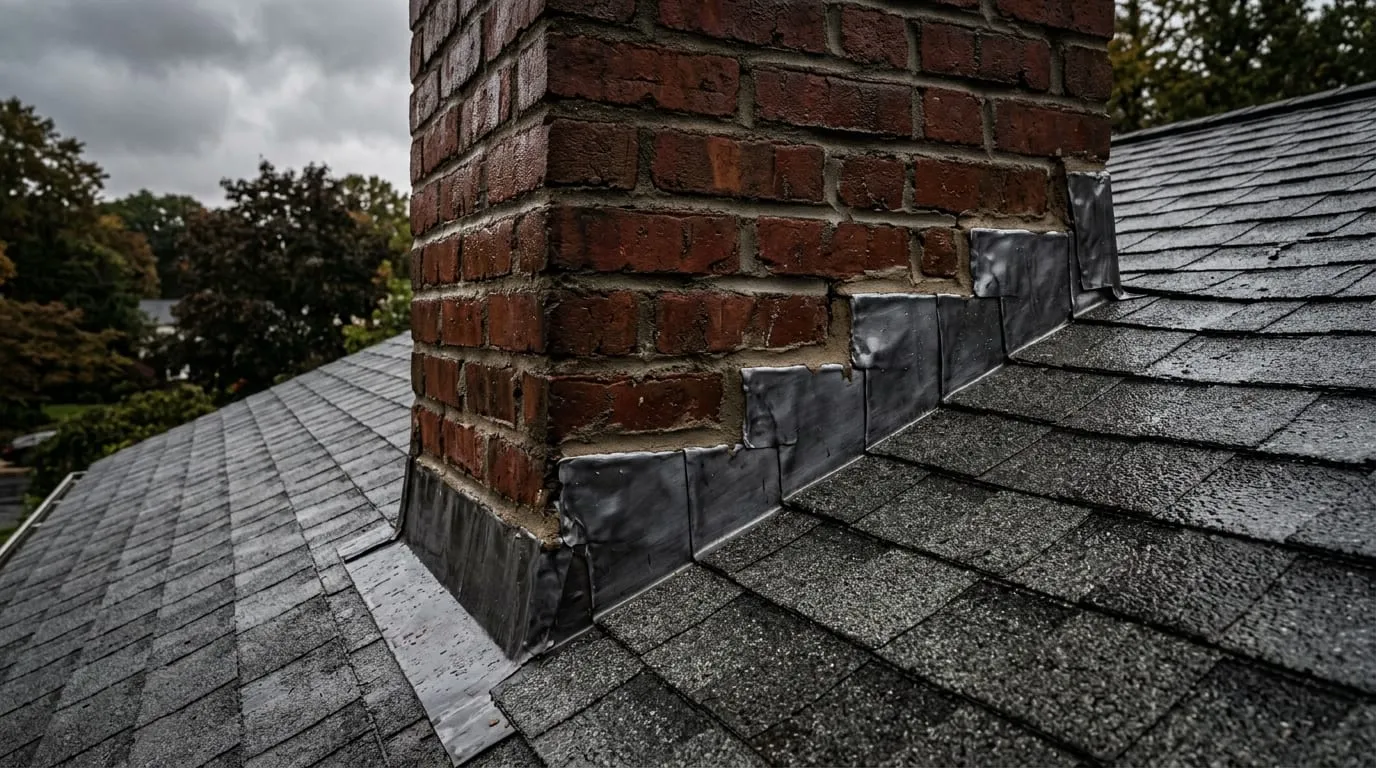
- Flashing — the metalwork where the chimney meets the roof, sealing that joint against wind-driven rain
The mechanics: water, ice, and roughly a hundred repeats
Concrete and mortar are porous, so a crown absorbs whatever rain sits on it. If that moisture is still there when the temperature drops through 32°F, it freezes — water expands about nine percent as ice, prying open whatever hairline it's sitting in. Somerset County's climate does that to an exposed crown 107 to 117 times a winter, then again the next winter, and the one after that. A crack that starts as a surface hair widens a little more on every pass. Once it reaches the flue tile, the crown stops shedding water and starts routing it into the middle of the stack — often surfacing later as a stain on a ceiling nowhere near the fireplace, which is why a real rebuild resets the joint at the liner rather than just patching the top.
Reading your own crown from the ground
You cannot certify a crown from the driveway, but you can usually tell whether it's worth sending someone up a ladder. Binoculars, or a phone camera zoomed in, answer most of it.
- A crown that overhangs the brick slightly, with a clean, unbroken edge, is still doing its job
- A crown sitting flush with the brick, or missing its edge at one corner, has already started to fail
- White powder or dark staining below the crown means water is already moving through the masonry
- Flaking or spalled brick faces, especially on the weather side, are a later stage of the same problem
A ceiling stain a floor away from the fireplace
The two most common water sources on a chimney — the crown and the flashing — get confused constantly, because the symptom shows up somewhere else. A flashing leak tracks with wind: it appears near the chimney breast and worsens on nights the rain comes in sideways. A crown leak tracks with duration instead — a saturated crown keeps feeding water down through the masonry for days after one long rain, and it can surface as a stain a floor below and several feet off to one side. That's why a roofer can climb up, find the shingles sound, and send a homeowner away no closer to an answer.
Why a skim coat rarely lasts a season, and what a permit has to do with it
The cheapest fix offered for a cracked crown is a thin layer of fresh mortar troweled over the top. It fails for a simple reason: the movement that opened the crack is still there, and a skim bonded to a slab that keeps flexing through every freeze cracks again along the same line, often before the next winter is out. A crown split down to the flue tile needs to come off and be re-poured with a generous overhang and a flexible seal where the new concrete meets the tile, not resurfaced. One thing worth knowing first: under New Jersey's Uniform Construction Code, brushing a liquid lining material inside an existing flue is the one chimney task exempt from a permit — rebuilding a crown or installing a new liner is not, and Bridgewater Township, which runs its own construction office rather than routing through Somerset County, is where that permit gets pulled. None of that changes the diagnosis, only who signs off on the repair.
Chimney crown questions Bridgewater homeowners actually ask
How many times does a chimney crown here really freeze and thaw in a winter?
At the two closest NOAA stations, Somerset Airport and Somerville 4 NW, the air falls to 32°F or below on well over a hundred days a year and climbs back above freezing on all but a couple dozen of those days. The difference is roughly 107 to 117 crossings a year — the number of times a wet crack actually cycles through freeze and thaw in one season (NOAA Climate Normals, 1991-2020).
Is a cracked crown urgent, or can it wait until the weather warms up?
It's rarely an emergency in the sense of needing a call tonight, but it isn't a repair that gets easier by waiting. Water already sitting in the masonry in December keeps freezing and widening the crack all winter, so a crown found in October is worth scheduling in October — the repair needs dry, mild days to cure, which points toward late summer and early autumn rather than January.
Can a hairline crack in a crown just be sealed instead of rebuilt?
Sometimes, if the crack hasn't reached the flue tile yet — a proper crown sealant can buy real time on a hairline that is still just surface crazing. Once the crack runs down to the tile, or the outer edge has started to crumble, sealant is a delay rather than a fix, and the honest answer is a rebuild.
How do I know it's the crown and not the roof flashing?
Timing and location do most of the work. A flashing leak shows up close to the chimney and tends to follow wind-driven rain. A crown leak can appear a room away or a floor down and tends to follow long, steady rain instead, because it depends on how saturated the masonry gets rather than which way the wind was blowing.
Does fixing a chimney crown in Bridgewater require a permit?
It depends what the work actually is. New Jersey's construction code exempts exactly one chimney task from a permit: applying a liquid lining material inside an existing flue. Rebuilding a crown or installing a new liner is not on that exempt list, and Bridgewater Township — which runs its own construction office rather than going through Somerset County — is where that permit gets pulled.
Get a straight read on your own crown
Everything above is general — the freeze-thaw math, the terminology, the diagnostic checklist. What it isn't is an assessment of the chimney actually sitting on your roof. Describe what you're seeing — a ceiling stain, a crumbling corner up top, a flashing strip pulling loose — and we'll tell you whether it's the crown, the flashing, or something else entirely.
Related reading and repairs
Chimney repair
Crowns, caps, flashing and liners — the water-stopping work behind a masonry stack that's still standing but no longer shedding rain.
Read moreChimney inspection
A camera down the flue settles what binoculars at the crown can't — whether a problem stops at the top or runs deeper into the stack.
Read more