
Which Flue Is Yours in a Two-Family Chimney?
One masonry stack often carries two or three separate flues in a two-family house — one per appliance, sometimes a fireplace besides. Nothing on the roof says which is which; the only way to find out is to trace each one from its connector to its cap.
The short answer
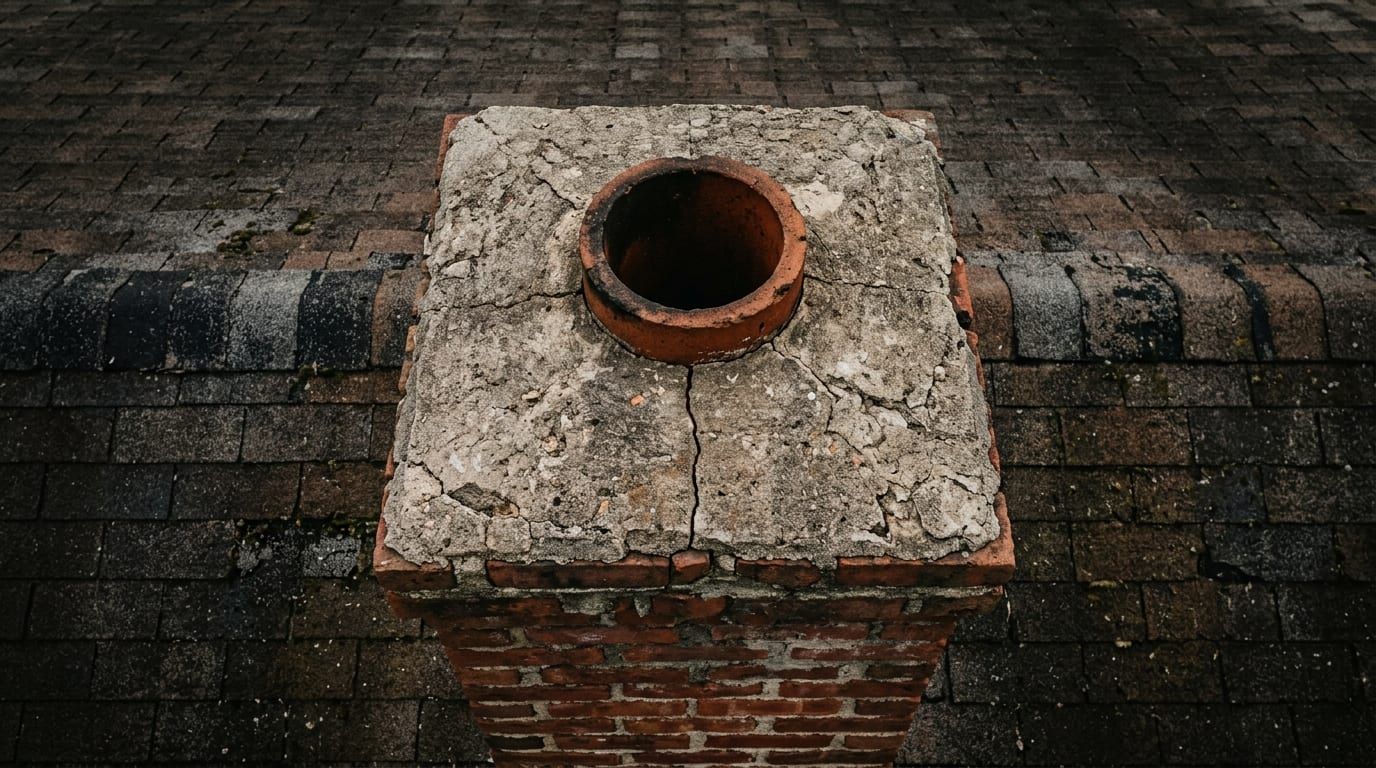
In a two-family house built before the 1960s, one masonry chimney usually carries two or three separate flues side by side — one for each unit’s heating appliance, sometimes another for a fireplace. Nothing on the roofline or the crown says which passage belongs to which unit; that information lived on a permit, not on the brick. The only reliable way to match a flue to an appliance is to trace it — start at the connector where your furnace, boiler or water heater ties in, and follow that flue up. A basement guess is exactly how a repair crew ends up capping the wrong opening, or relining a flue that was never the problem.
One Stack, Several Flues — What’s Actually in There
Walk the roofline of an older two-family in Somerville, Collingswood or Haddonfield and it is common to find one chimney doing the work of two households: a single masonry stack with several vertical passages built into it side by side, one for each stove, boiler or water heater that has ever been connected to the building. In Collingswood, 781 houses — 11.3% of the borough — are recorded as two-unit structures, and another 1,197 (17.3%) are single-family attached; in both cases one stack straddles the shared wall and serves two separate households at once. The masonry outside gives no hint of the count inside.
- A stack built for two households usually holds two or three separate flues side by side, not one shared opening.
- Each flue is meant to serve exactly one appliance from connector to cap — never two heating appliances at once.
- The exterior brick and the crown give no reliable clue which interior passage belongs to which unit.
Why the Basement Doesn’t Settle It
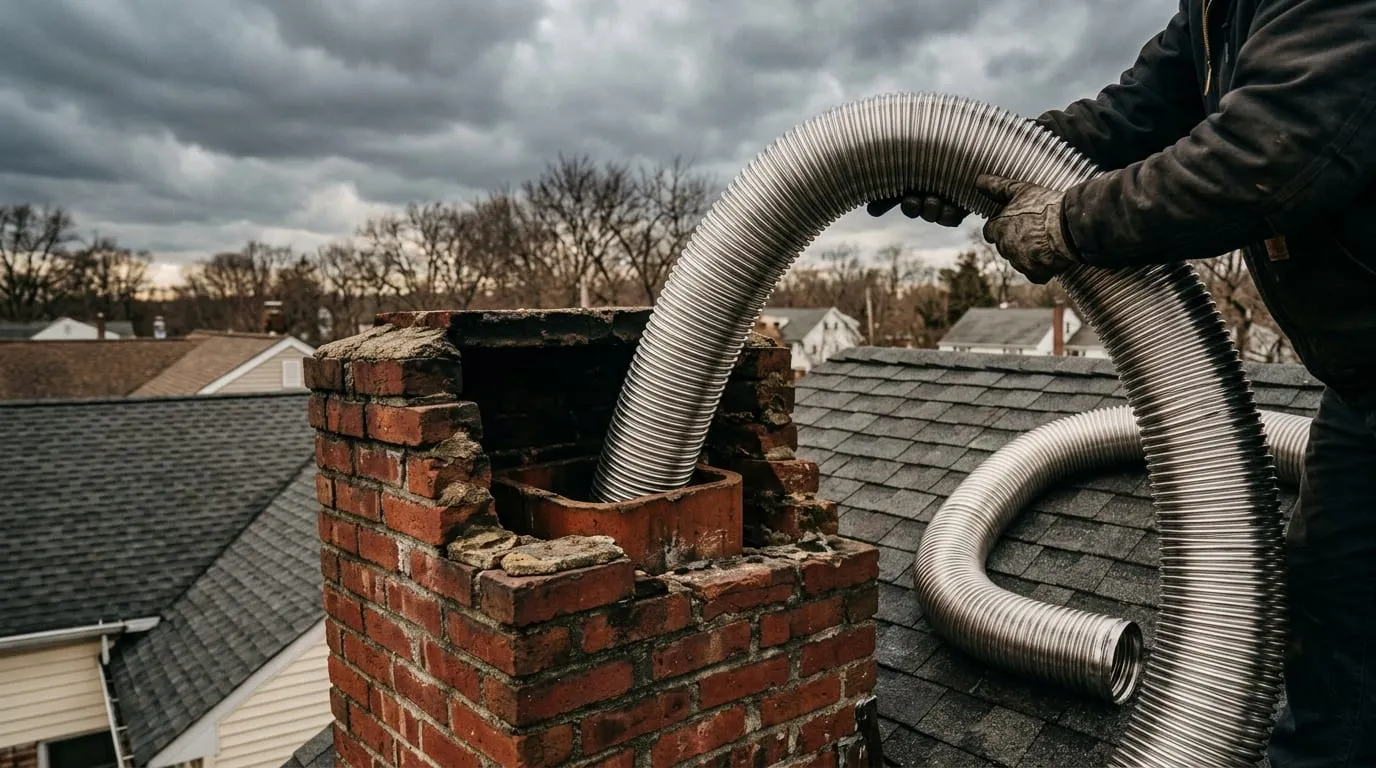
Standing in one unit’s basement, a homeowner can see where their own appliance connects — but that connector often turns, rises through a chase, and ties into the masonry a foot or two above where it looks like it should. Pennsauken Township’s housing makes the case at scale: 1,544 households, 11.3% of the town, live in two-to-four-unit buildings built around exactly this layout, one stack serving several appliances through connectors that have been rerouted every time a coal boiler became an oil furnace and then a gas one. Flue-to-flue leakage across the shared wall is invisible from inside either unit and shows up only on a camera run. A basement walk-through can confirm an appliance is connected. It cannot confirm what the rest of the stack is doing.
What a Camera Run Actually Finds
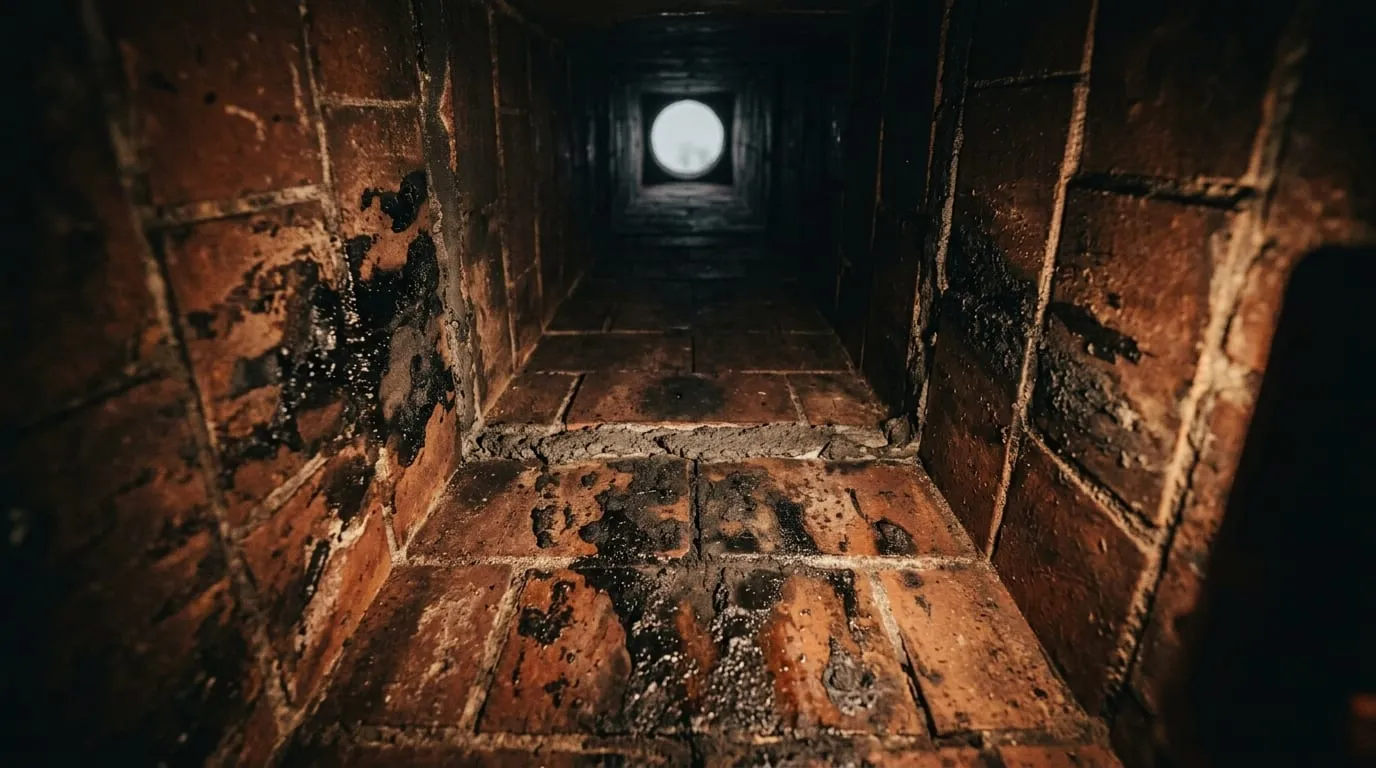
A camera lowered from the top of the chimney, or fed in from a cleanout at the base, follows one flue at a time for its entire run and answers the question a basement glance cannot: which passage this appliance’s exhaust rises through, whether that passage is lined, and whether it is intact against the flue next to it. On an older two-family stack, that scan tends to turn up a short, consistent list.
- A flue relined for gas that still carries the width sized for the coal or oil boiler it replaced decades earlier
- A thin or missing parge coat where two flues share a common wall — the point where cross-flue leakage starts
- Creosote or scale concentrated at a bend where an old connector was rerouted instead of removed
- A flue with no appliance attached at all, left open at the top and still connected to occupied space below
When One Flue’s Problem Becomes the Neighbor’s
Somerville carries the same pattern at borough scale — 57.8% of its housing is multi-family, and that share brings party-wall construction with it: chimneys that serve more than one unit, or more than one appliance, inside a single stack. Code has always treated the termination of that stack as one problem, not two — the outlet has to clear the roof by three feet and clear anything within ten feet by two, for the whole chimney, not one household’s half of it. New Jersey’s own one- and two-family dwelling subcode tightened chimney clearance again when it adopted the 2024 IRC in October 2025. None of that reaches a homeowner who has never looked past their own thermostat, which is exactly why NFPA 211 calls for an annual look at the whole chimney — in a shared stack, the only version of ‘annual’ that means anything is one that covers both flues.
Before You Call Anyone About It
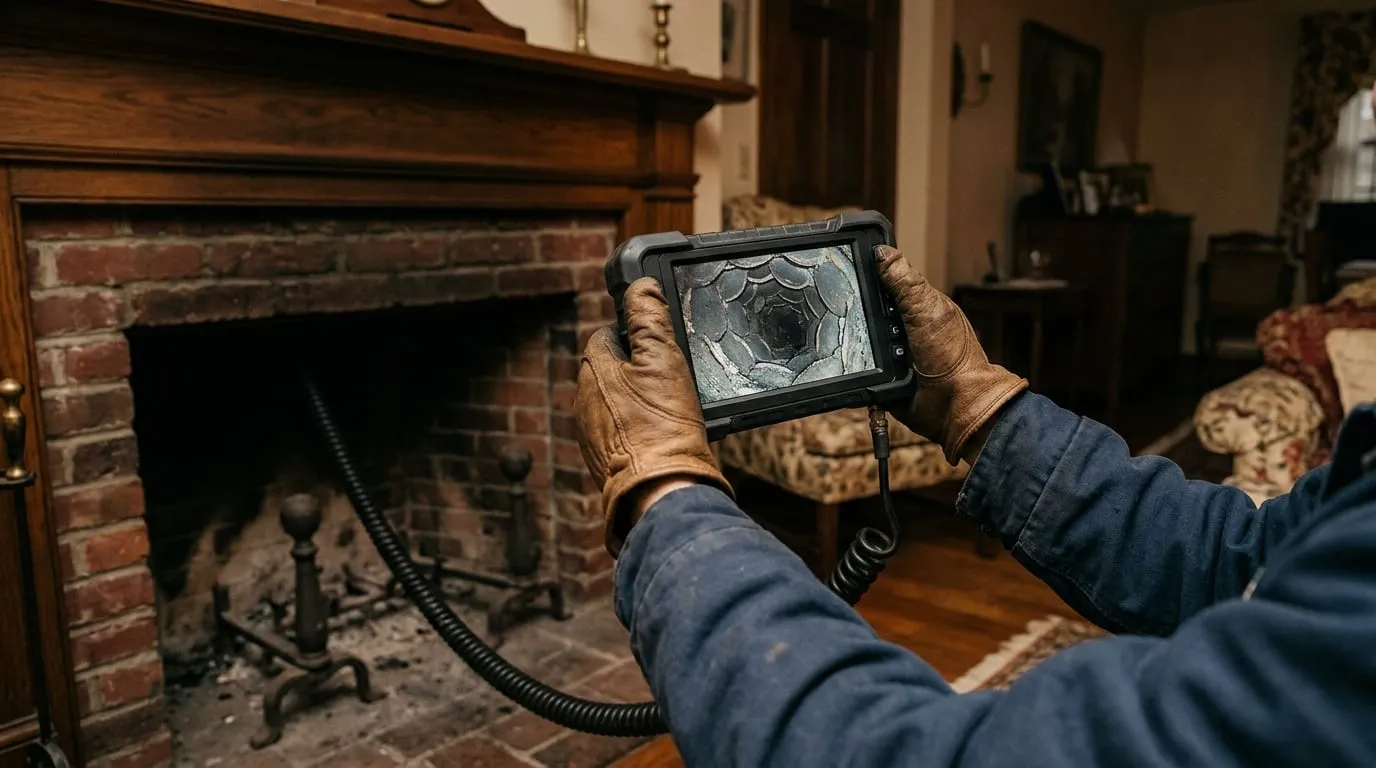
If you share one exterior chimney with the other unit in your two-family, the useful thing to gather before any appointment is simple: where your own appliance connects in your basement or utility closet, and whether the other unit has had any chimney, furnace or water heater work done that you know about. That one piece of shared history — a reline, a capped opening, a swapped water heater — usually explains more than a fresh inspection can on its own. Sweeping, inspecting or repairing a shared stack is still one visit and one camera run, not two jobs billed separately; both flues get scoped together because the chimney is one structure, whatever the deed says about the units inside it.
Two-Family Chimney Questions We Hear Often
Can one chimney legally serve two separate housing units?
Yes — a single masonry chimney with multiple flues serving a two-family house is ordinary construction across the older doubles and twins in this service area, as long as each appliance keeps its own flue from connector to cap. Two appliances sharing one flue is the condition that fails, not two flues sharing one chimney.
How can I tell how many flues are actually in my chimney?
Counting openings on the crown from the ground is a start, but an older or capped-over stack can hide a flue that lost its cap years ago. The only reliable count comes from running a camera down each visible passage from the top, or up from a cleanout at the base.
Does a shared chimney mean shared risk between the two units?
It can. A cracked or thinned parge coat between two flues lets combustion byproducts move sideways instead of straight up, and that fault does not show from either unit’s basement — only on a scope of the wall between the two flues.
What should I ask the other unit before scheduling an inspection?
Whether they have had any chimney, boiler, furnace or water heater work done, and whether an appliance was ever removed without capping its flue at the top. An open, disused flue in a shared stack is a common finding, and it is an easy one to miss if only one unit gets looked at.
Does each unit need its own inspection, or does one visit cover both flues?
One visit covers the whole stack, because the chimney is one structure no matter how the deed splits the building. Both flues get scoped in the same appointment, and the report says which flue serves which appliance before the ladder comes down.
Not Sure Which Flue Is Which?
Tell us it is a two-family with one chimney and we will ask the right questions before anyone gets on the roof — which unit, which appliance, and whether the other side has had any chimney work done. A camera run settles the rest.
Chimney Services for a Shared Stack
Chimney Inspection
A camera-based look at the flue, top to bottom, with a written report on what it found and which appliance it serves.
See the serviceChimney Repair
Relining, parging and crown work for a masonry stack that carries more than one flue.
See the serviceChimney Sweeping
The camera goes down before any brush does, so the right flue gets cleaned, not just the nearest one.
See the service