
Crown, cap, flashing and liner repair in Somerset County, NJ
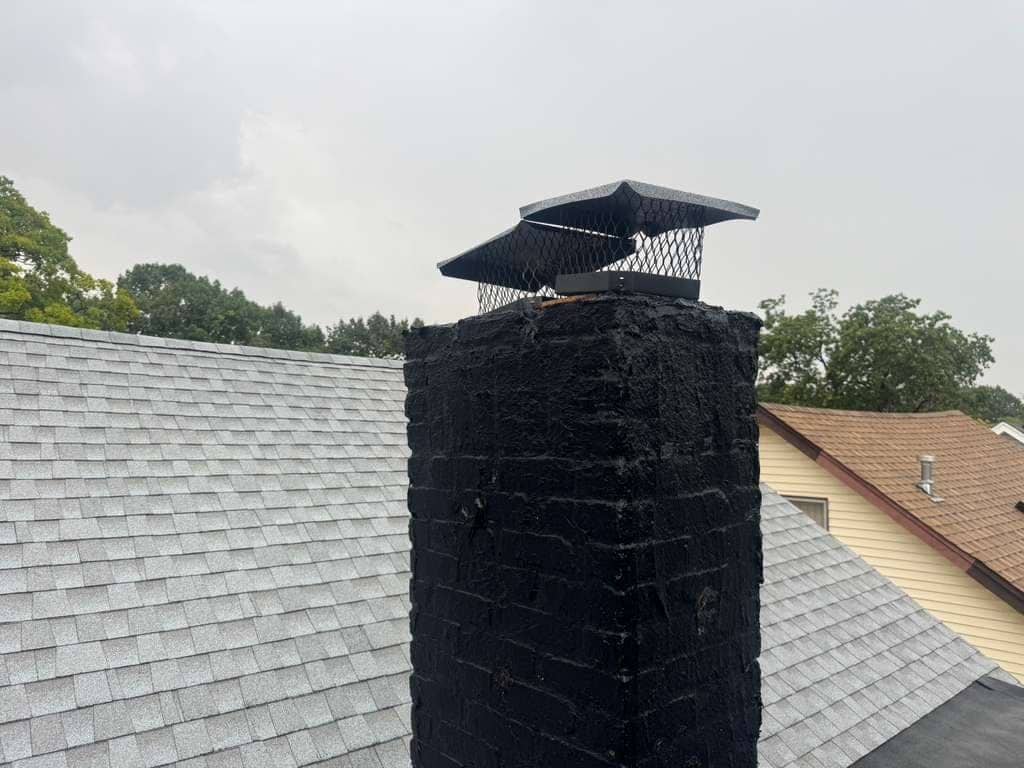
A chimney leaks where its top layer gives out first, whether that is a split crown, flashing that has pulled away from the shingles or a cap rusted thin. Over a winter that water works into the flue tile and the brick. Our crew fixes crowns, caps, flashing, liners and mortar joints in Bridgewater and the rest of Somerset County while the damage is still small.
In plain terms
Brown marks on the ceiling next to the chimney, a damper with rust on it and white streaks down the outside brick tell the same story. Moisture has found its way in. Census figures put 417 Bridgewater Township households on fuel oil and 228 on LP, and those flues sit outside any gas utility's checks. Plenty of gas homes, too, have a chimney nobody has opened since the furnace went in. It stays that way until the owner books a visit.
The crown takes the weather first
Over the top of the masonry sits the crown, a concrete or mortar cap shaped to shed water. It has no cover of its own and catches every storm head on. After it splits, rain stops draining off the edge and slips into the opening instead, then along the flue tile and down into the joints below. What passes for one thin line from the driveway is usually a spread of cracks when you are standing beside it.
- Hairline cracks that grow every winter as the water inside them freezes
- Spalling, with the top layer peeling off in chips
- A flat pour that has collected puddles since it was built
- Open seams around the flue tile, where water most often gets in
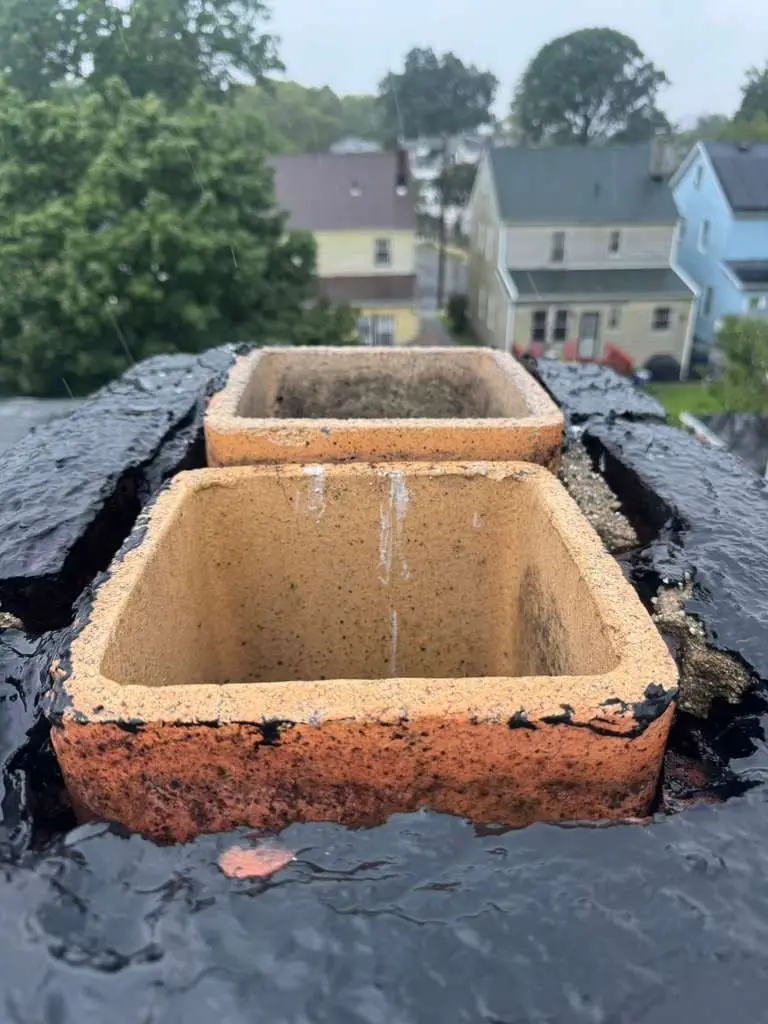
Once a crown cracks, rain has a straight route to the flue tile below it.
Somerset masonry freezes and thaws about a hundred days a year
Freezing and thawing cause most of the split crowns and open joints we see. Water settles into a gap, turns to ice, pushes the gap wider and melts again until the next frost. NOAA climate normals for the Somerset Airport station list around 124 days a year with a low of freezing or colder and around 17 when it never gets above freezing. That leaves roughly 107 days a year when the air crosses the freezing mark. The Newark station near the coast has about 65 such days, so chimneys around Bridgewater take a good deal more of this wear.
What a full repair can cover
Each chimney needs its own fix. Most of our time goes into finding out which of these yours calls for before we touch it.
- A repaired crown, or a new one formed with a slope and sealed
- A mesh cap that stops rain, birds and squirrels
- New sealant on the flashing at the roofline
- Repointing, where worn mortar joints are cut out and refilled
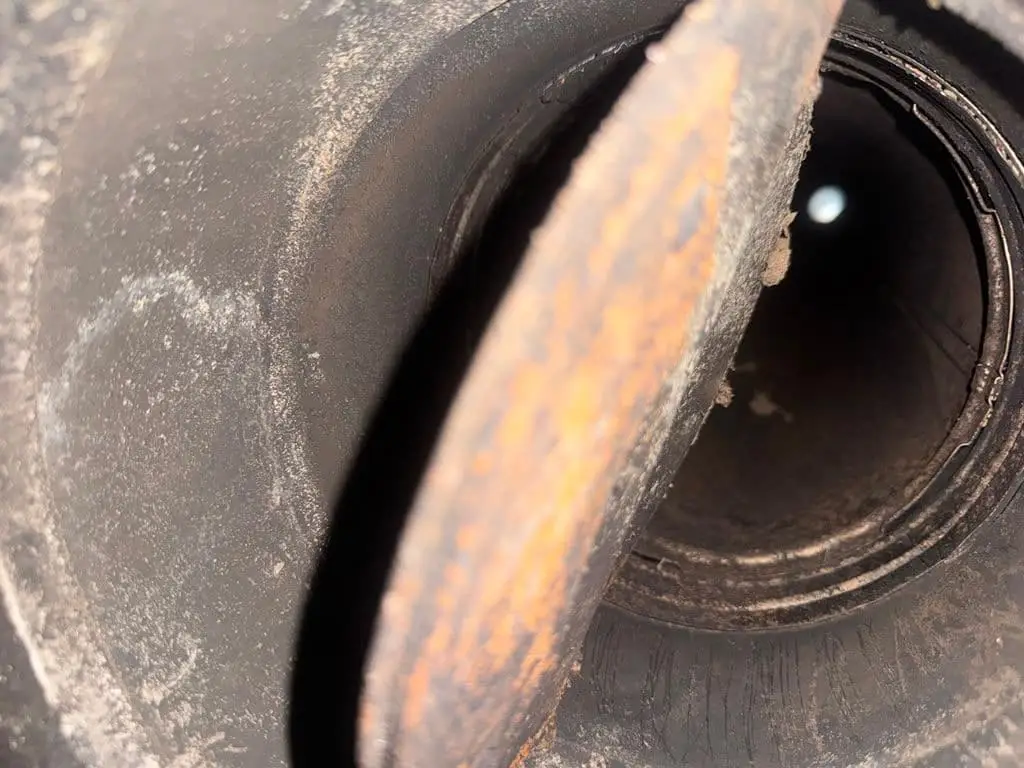
- A liner installed when the flue tile is broken
When to call before the spring rains
Water from a cracked crown or loose flashing travels down inside the wall and shows up as a ceiling mark, which is why that stain usually traces back to the chimney and seldom to the roof. A powdery white film on the brick, known as efflorescence, shows moisture passing through the masonry. A damper that has rusted and will no longer shut is often the earliest hint that water is getting past the cap. Each of these gets worse with time.
Reviews on our Google listing
Chimney repair questions
Does a chimney repair need a permit in New Jersey?
It depends on the work and on your town, because the code is enforced locally. Bridgewater runs its own construction office, as does every Somerset town we serve. We tell you when a repair needs one.
How do you tell whether a leak comes from the crown, the cap or the flashing?
Seen from the yard they all look the same, with a mark on the ceiling, wet ash on the damper or a stale smell. Getting up to the roofline and running the camera down the liner tells them apart.
Can the crown be fixed without rebuilding the chimney?
In most cases. A crown can be patched or poured again by itself, and taking the chimney down is only on the table when the brick itself is crumbling.
Will homeowners insurance pay for the repair?
That depends on your policy and on the cause. Sudden storm damage is more often covered than slow freeze and thaw wear, which many policies treat as upkeep. Check with your insurer.
What is the difference between repointing and a rebuild?
Repointing cuts out the old mortar and fills the joints again while every brick stays where it is. Rebuilding means taking the chimney apart and laying the brick again, which we suggest only when the brick is no longer sound.