Oil to Gas and the Oversized Flue
Switch a Bridgewater furnace or water heater from oil to natural gas, and the exhaust usually keeps climbing the same brick chimney that served the old burner — a shaft built for a fire several times its size. Here is what that mismatch does to the masonry, and what actually fixes it.
The short answer
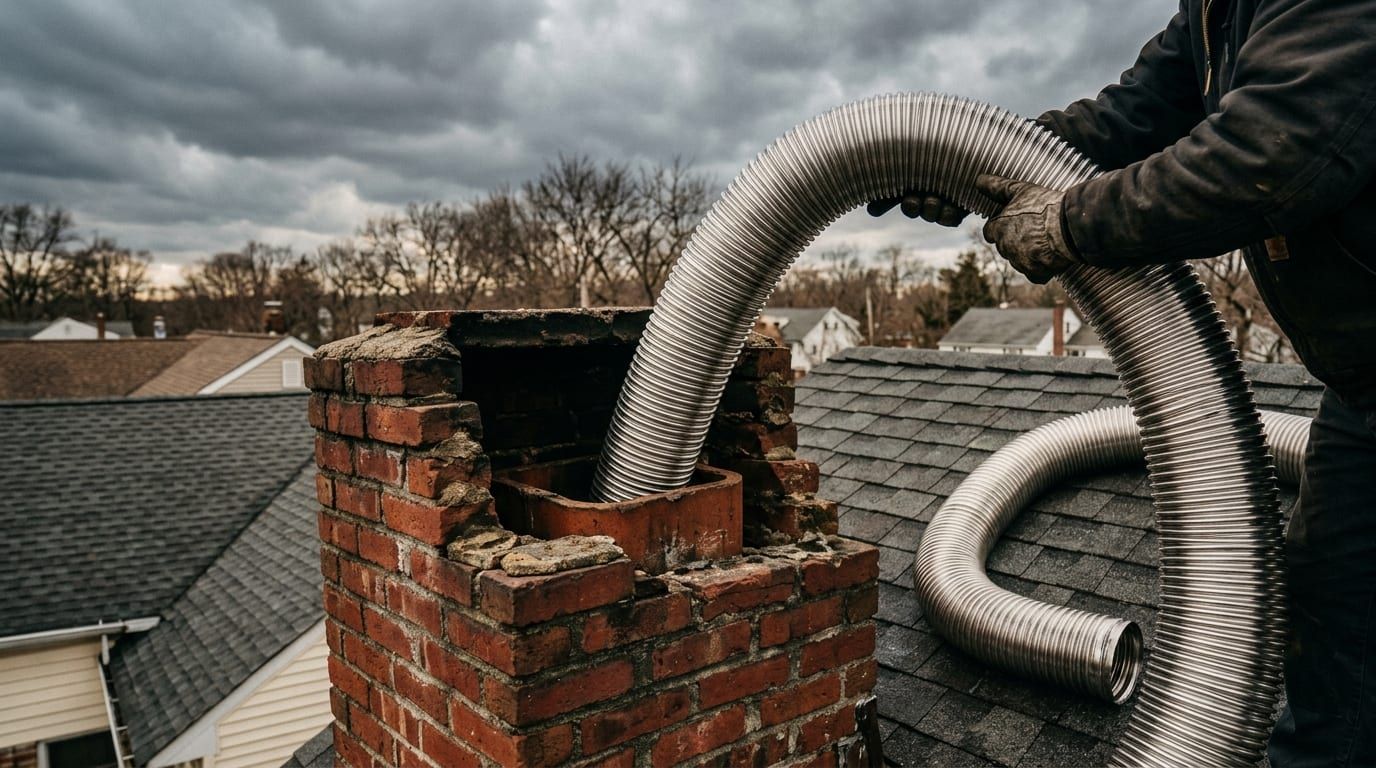
The new gas appliance burns smaller and cooler than whatever it replaced, but the chimney around it didn’t shrink to match. A masonry flue built to carry a coal-fired or oil-fired furnace gives that small, cool exhaust a lot of cold brick to lose heat against on the way up, so some of the water vapor in it condenses before it ever clears the top. That condensate is mildly acidic, and given a few winters it works on the mortar joints and the tile lining from the inside, where nobody is looking. A liner sized to the appliance actually connected — not to the flue that happens to be standing there — is what stops it.
A smaller fire, in the same old shaft
In Bridgewater, that swap is common enough to plan around: close to eighty-five percent of the township’s 16,975 homes already heat with natural gas, but 417 households still burn fuel oil and another 228 run on propane — and each one is a candidate for exactly this conversion the day the old appliance finally gives out. What changes is the fire. What doesn’t change is the chimney standing over it.
- Every unit of gas burned produces far less exhaust heat and volume than the oil flame — or the original coal fire — the same masonry shaft was first sized to carry.
- A furnace or boiler is usually replaced first; the water heater often stays behind, venting alone into a flue that used to share the work with a much larger appliance.
- Nothing about the brick or the tile lining changes in that swap — only what’s now pushing exhaust up through it.
Cold masonry beats a small, cool exhaust every time
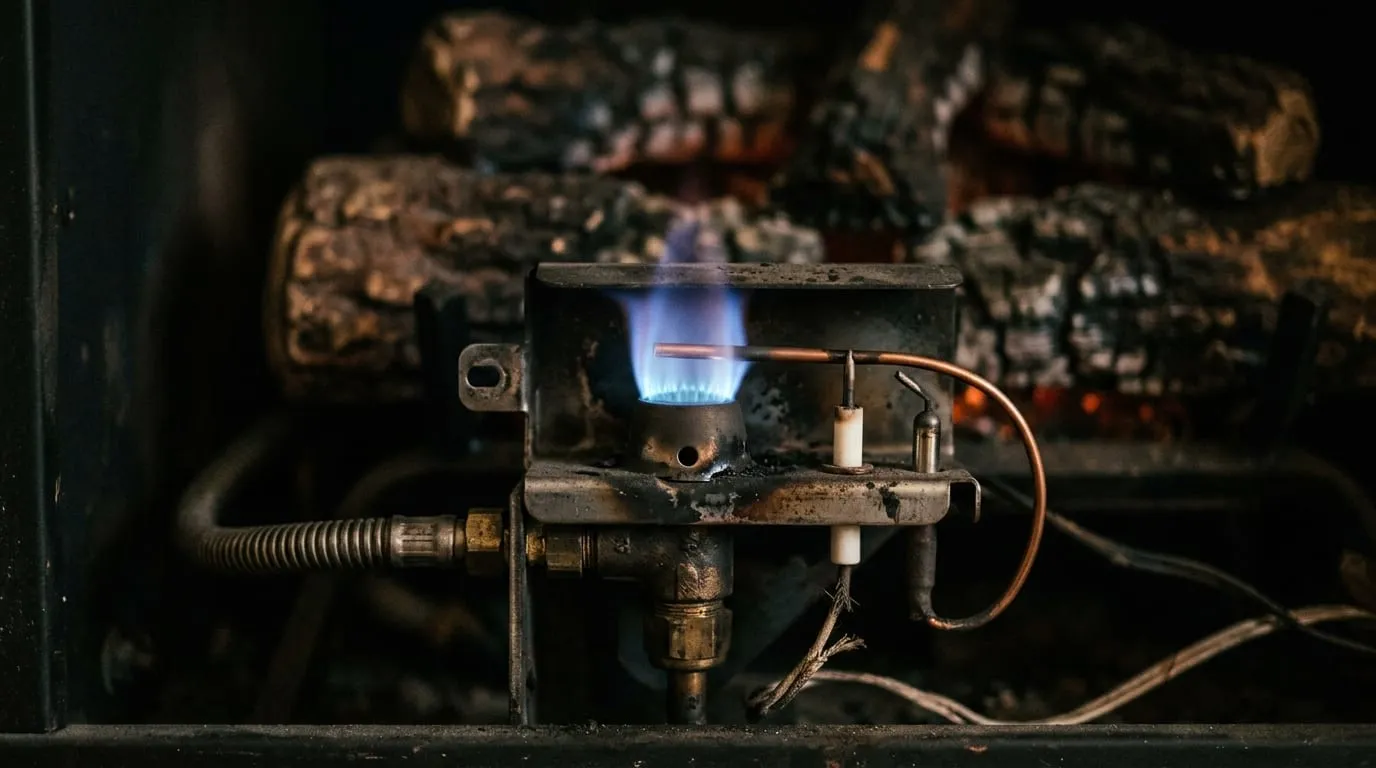
A chimney only works while its exhaust is warm enough and moving fast enough to clear the top before it cools. Send a small, lukewarm stream of gas exhaust up a shaft built to carry a coal-fired or oil-fired furnace, and it spends longer in contact with more cold brick and tile than it was ever sized to warm. Somewhere on the way up, the water vapor riding in that exhaust drops below its dew point and turns back into liquid — right there on the inside of the flue, one heating cycle at a time, all winter, every winter.
What it looks like before anyone opens up the chimney
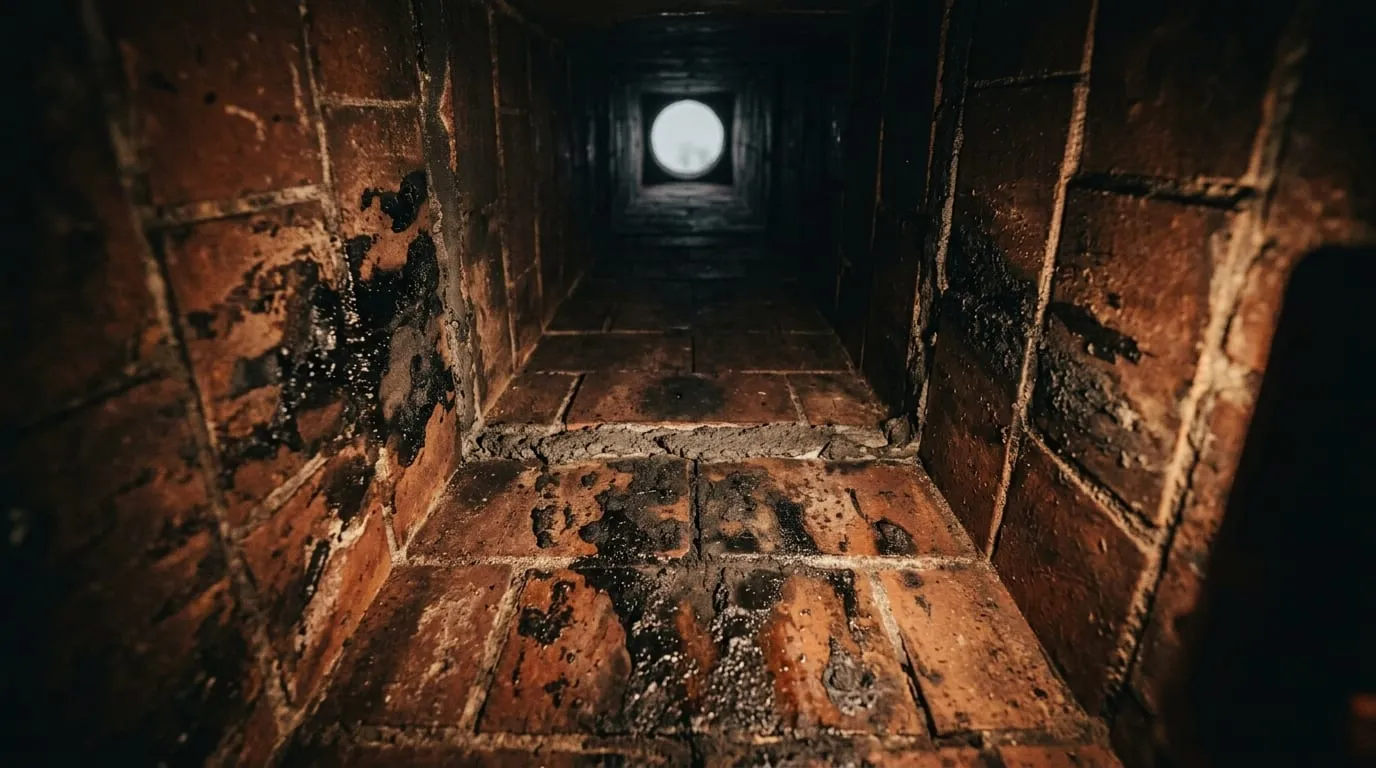
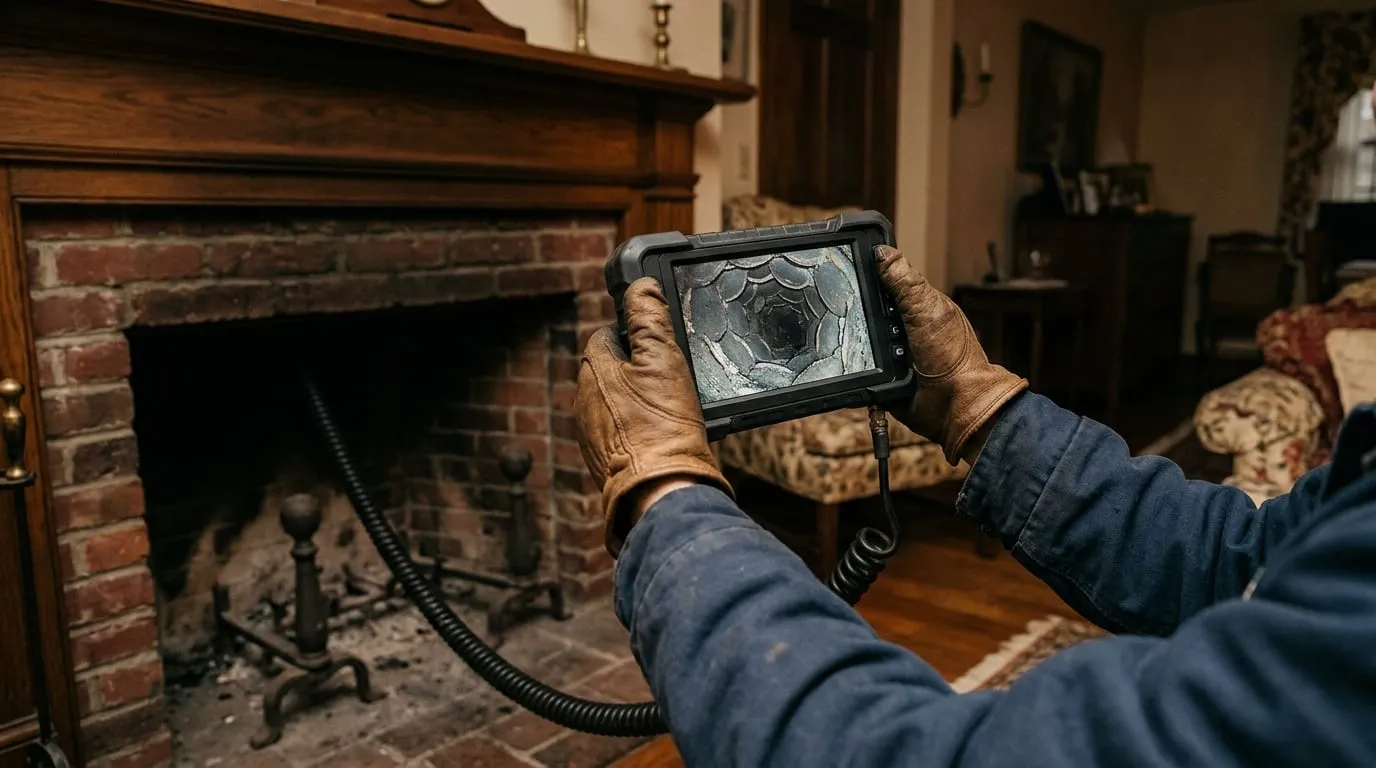
None of this happens overnight, and most of it shows up outside the flue long before anybody puts a camera down it. A scan is the only way to see the tile itself, but a few things are visible from the ground or the basement well before that:
- A chalky, whitish bloom spreading across the brick face below the flue — mineral salts the moisture carried out of the masonry.
- Brick or mortar starting to flake and crumble, usually worst on the side of the stack that takes the weather.
- A damp patch on an interior ceiling or wall that a roofer checks, finds nothing wrong with, and can’t explain.
- A furnace, boiler, or water heater that’s grown reluctant to fire, or that short-cycles more than it used to.
- A faint exhaust smell near the appliance in the basement, worst in still or humid weather.
The paperwork Bridgewater actually expects
Bridgewater runs its own construction office under Construction Official John Tillotson, and an oil-to-gas swap here is not a single line on a permit. Removing the old oil tank is its own permitted job. Installing the new gas appliance is a second — the township’s own list names furnaces, boilers, and water heaters directly. And New Jersey’s UCC Form F370, “Chimney Verification for Replacement of Fuel-Fired Equipment,” is the third: it carries a checkbox for “Oil to Gas Conversion” and another for “Masonry Chimney-Unlined,” and it makes whoever installs the new appliance certify the chimney is “appropriately lined and sized for the appliance(s) being installed.” By its own header, that form “may not be submitted by a homeowner in lieu of the required inspection” — somebody has to actually look.
Whether it needs a liner this year
A conversion alone doesn’t automatically call for a new liner — the flue’s own condition is what decides that, not the appliance swap that triggered the inspection. A scan that turns up sound tile, tight joints, and an appliance drafting the way it should is a chimney worth photographing and checking again next season. A scan that turns up open joints, missing mortar, or masonry already carrying moisture from the inside is one where the choice is basically made — every season of waiting only lets the water reach further before the liner goes in anyway. Where a liner is called for, current New Jersey code (the 2024 IRC, as adopted at N.J.A.C. 5:23-3.21) asks for a chimney lined with material suited to whatever’s actually connected — which, on an oil-to-gas job, usually means a continuous stainless liner run the full height of the flue and matched to that appliance’s own vent size, not to the shaft it happens to be dropped inside.
Oil-to-gas conversions and oversized flues
Does every oil-to-gas conversion in New Jersey need a new chimney liner?
No. State law requires an F370 chimney verification on every fuel-fired equipment swap, but a new liner is only called for when that inspection finds a flue that can’t handle what’s now venting into it — unlined masonry, open joints, or a shaft clearly oversized for the appliance. A sound flue with proper tile can pass verification as it stands.
Who is allowed to fill out the F370 form?
Whoever installed the new appliance, not the homeowner. The form’s own header states that homeowner verification isn’t accepted in place of the required inspection, so a self-installed water heater or furnace still needs a professional to look at the chimney before the permit closes out.
Is an oversized flue only a problem in old, pre-war houses?
No. Most of Bridgewater’s housing dates from the 1960s through the 1990s, not before the war, and a good number of those homes are still on oil or propane today. Any one of them can end up with the same mismatch the day the furnace or water heater gets swapped for a gas unit — the age of the house matters less than whether the chimney was resized along with the appliance.
What actually happens if the liner gets skipped?
The acidic condensate keeps working on the mortar and tile from the inside, out of sight, for as long as the mismatch stands. Years later it shows up as staining or flaking on the outside of the stack, a damp patch inside that doesn’t trace back to the roof, or a draft that’s grown weaker than it used to be — and by then the repair is usually bigger than the liner would have been.
How do I find out if my own flue is the problem?
A camera run down the length of the flue is the only way to see the tile itself rather than guess at it. Tell us what changed — which appliance was swapped and when — and we can tell you honestly whether that is worth scheduling now or something to keep an eye on.
Get the new appliance signed off properly
If a furnace, boiler, or water heater in your Bridgewater home has switched — or is about to switch — from oil or propane to natural gas, we’ll run a camera down the flue, tell you honestly what it’s carrying, and handle the F370 verification as part of the job.
If the chimney itself is the open question
Chimney Repair
Liner installs, crown and flashing work, and the masonry repairs that follow years of condensate or freeze-thaw damage.
See the serviceChimney Inspection
Camera-verified Level 1 and Level 2 inspections — the same look a fuel conversion, sale, or F370 verification calls for.
See the service