The Three Stages of Creosote and What They Mean
A chimney sweep does not invent the word stage to sound official. Each one calls for a different tool, and only the last one can start a fire on its own. Here is what actually separates them, and a number from Somerset County’s own housing survey that hides almost every wood burner it claims to count.
The short answer
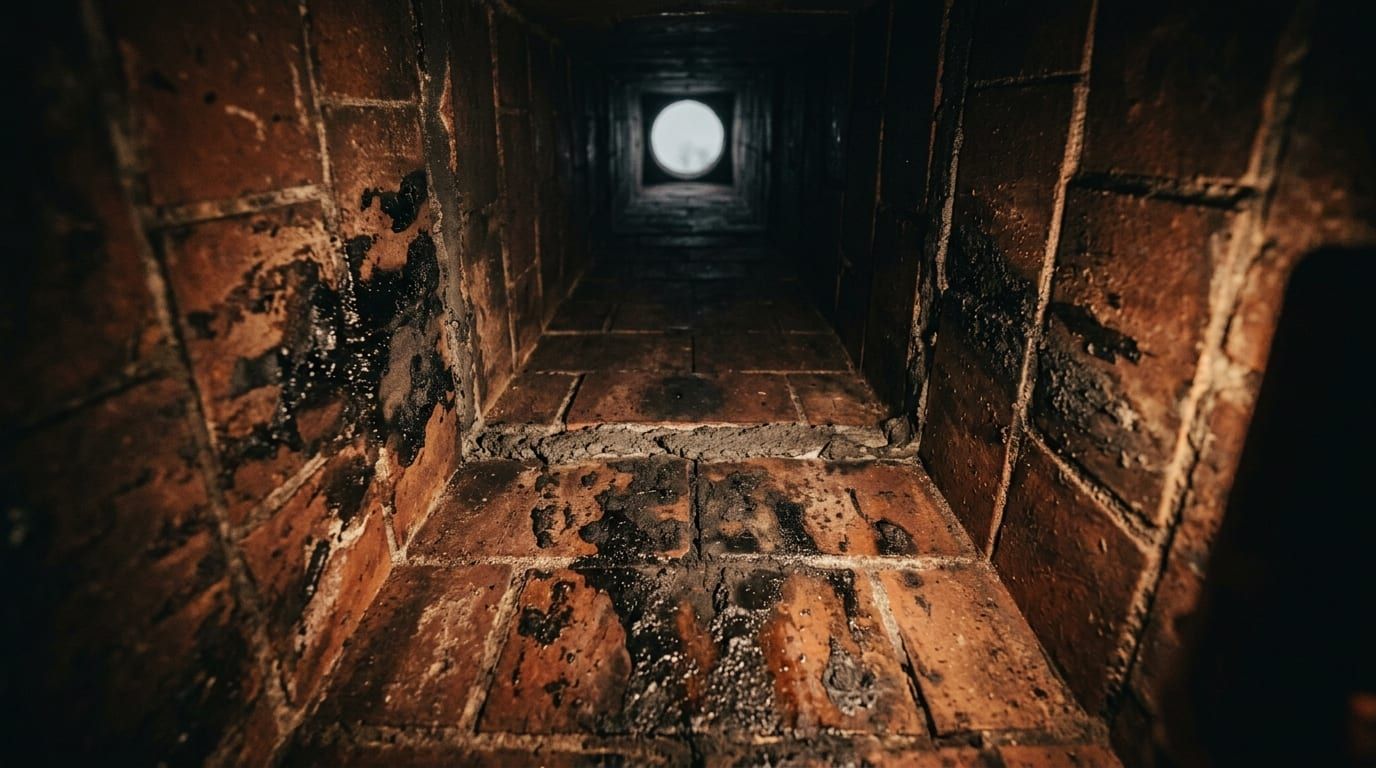
Creosote forms in three distinct states, and which one shows up in your flue depends on how much heat that smoke sheds on its way out — not how many fires you burned this winter. The first is dry and powdery, lifting away with an ordinary brush. The second has hardened into a dark, glossy layer that needs a motorized tool. The third has bonded to the flue itself as a hard, glass-like glaze — the one state that can catch fire on its own. A cold, oversized flue or an overnight banked fire can reach it faster than most people expect.
The Real Variable Is Temperature, Not Firewood
Every wood fire sends the same basic byproduct up the chimney: unburned particles riding in the smoke. What happens to them next depends on how warm that smoke stays. Smoke that keeps its heat to the cap carries most of that residue out with it; smoke that cools too early leaves the particles behind, and each pass adds another thin layer on the last. A household burning wood nightly through a well-matched flue can stay at the lightest stage for years, while a neighbor lighting one fire a week under the wrong conditions reaches the hardened stage first.
- A flue built for a bigger firebox, or for a fuel this chimney no longer burns, giving the smoke far more cold surface to cross before it escapes.
- An exterior chimney stack, which sits close to the outdoor temperature through a Somerset County winter no matter how hard the fire below it is working.
- Wood that was split within the same year and never had a summer to dry, so the fire spends its early heat driving off water instead of warming the flue.
- A damper choked down to bank a fire overnight — a few extra hours of warmth traded for several hours of cool, smoldering smoke.
The First Two Stages, Side by Side
The lightest stage looks like ordinary soot — dry, dark and flaky — and it lifts out of a flue liner with a few passes of an ordinary brush. A house burning dry, split hardwood in quick, hot fires through a well-matched flue will typically show almost nothing else, and a routine annual visit clears it without drama. Left under the wrong conditions, that same deposit thickens and darkens into something closer to set tar than soot, and a hand brush stops doing anything useful. Clearing it calls for a motorized head with rotating chains or whips, worked down the shaft to grind the layer loose — which takes longer, and is usually why a sweep who finds it says so rather than billing extra time quietly.
Stage Three Is the One That Can Ignite on Its Own
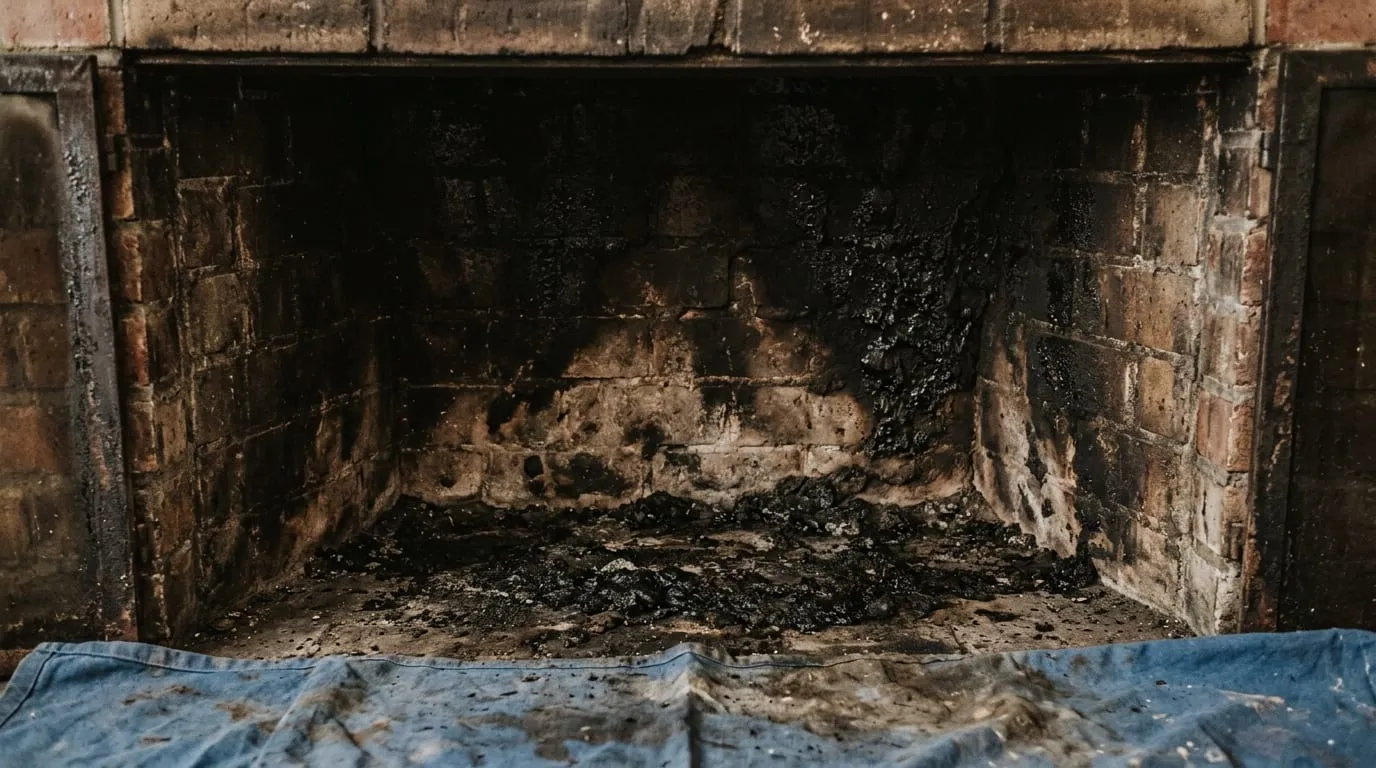
Given enough time under the wrong conditions, the hardened middle stage keeps cooking until it fuses to the tile or liner as a hard, glass-like glaze. A brush does nothing to a bond like that, and a motorized head barely scratches it. What is left is a chemical softener applied across several supervised fires, or a full liner replacement — neither happens in a single visit. This stage is treated as urgent rather than routine because it is fuel fused directly onto the chimney’s inner surface, and once it ignites it burns hot enough to split tile and force mortar joints apart along the flue’s full run.
- A flue in this condition should not be used again until it has been addressed — one of the few genuinely urgent calls in this trade.
- None of the three stages can be told apart with confidence from a flashlight at the firebox; a camera run down the flue is what actually settles it.
- The hardened glaze can form within a single burning season when a cold, oversized flue is fed damp wood and banked down overnight — it does not take years.
A Gas Insert Never Reaches Any of These Stages
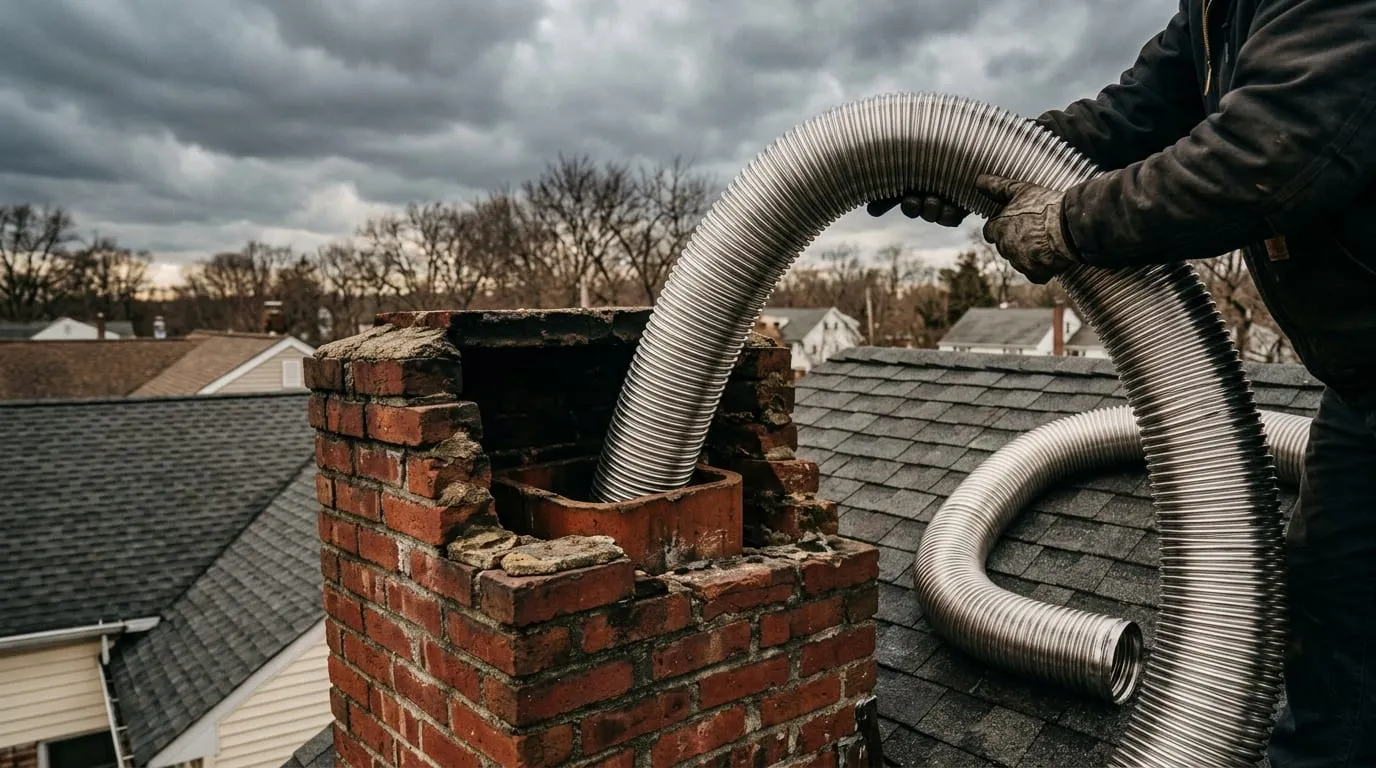
None of this applies to gas. Burning gas does not produce the particulate that turns into creosote, so a gas-fed flue never works through these three states. What it does instead is corrode: the exhaust is cooler and wetter than a wood fire’s, and the moisture in it condenses into a mildly acidic liquid that works on mortar joints and metal fittings from the inside. That is why the annual visit on a gas insert or furnace is billed as an inspection rather than a sweep — nothing to brush out, only a flue to check for condensate damage.
- Wood smoke leaves a solid residue behind; gas exhaust leaves an acidic liquid behind — different failure, different tool, same reason to have somebody look every year.
- A gas flue that is oversized for the appliance venting into it condenses more, not less — the gas-side version of the same heat-loss problem.
Bridgewater’s Own Numbers Miss Almost Everyone This Applies To
Federal housing data counts seventeen Bridgewater Township households as heating primarily with wood, out of more than sixteen thousand occupied homes — a figure pulled from the same Census table used throughout this site’s local research. It is worth being honest about what that count cannot see: a homeowner who lights a wood stove most weekends without ever switching off the gas furnace, or an insert installed as a supplement in a house that reports as gas-heated on every survey that asks. The Census records only a home’s primary heating fuel, so none of those households show up in it — and none of them are exempt from anything written above. NFPA 211 asks for the same thing every year no matter what the survey shows: somebody looks. What that visit finds decides whether the fix is a brush, a chemical treatment, or a full reline.
Creosote Questions, Answered Directly
How do I know which stage of creosote I actually have?
Not reliably with a flashlight — the lightest and the most dangerous stage can look surprisingly alike from the firebox in poor light. A camera run down the flue shows the texture and color clearly, which is why an inspection that includes a camera pass settles it instead of guessing.
Why does an oversized flue make creosote build up faster?
A flue sized for a bigger appliance, or for a fuel the chimney no longer burns, gives the smoke a larger cold surface to cross and less speed to cross it with. Both effects cool the smoke down faster, which is the exact condition that accelerates every stage.
Can homeowners remove hardened or glazed creosote themselves?
The lightest stage, often, with an ordinary brush. The hardened middle stage needs motorized tooling most households do not own. The glazed stage has bonded to the flue itself — no hardware-store product removes it, and treating a log as a substitute for a visit is how a dangerous flue gets left alone for another winter.
Do creosote-reducing logs actually help?
They can soften the hardened middle stage enough for a brush or a motorized tool to remove it. They do very little to a fully glazed flue, and they are no substitute for having somebody look — a log changes the texture of a deposit, not which stage you actually have.
My fireplace has a gas insert and produces no creosote. Do I still need an annual visit?
Yes, for a different reason. Gas exhaust corrodes rather than coats, and that damage is no more visible from the firebox than creosote is. A gas appliance still gets checked once a year — checked rather than swept, but not skipped.
Not sure which stage your flue is at?
Tell us what the last sweep found, or that it has been a while since anyone looked. We will tell you what that likely means and get the right visit on the calendar.
Related reading and repairs
Chimney sweeping
A camera pass down the flue happens before any brushing starts, so a hardened or glazed stage gets named rather than guessed at.
Read moreChimney inspection
Two inspection levels and one written report — which one applies depends on what has changed since the flue was last checked.
Read more