
When Air Duct Cleaning Is Actually Worth Paying For
Somebody is always offering to clean the ducts. Here is the honest version — the three situations where it genuinely helps, the ones the EPA has actually put in writing, and what it will not fix no matter how it is sold to you.
The honest answer
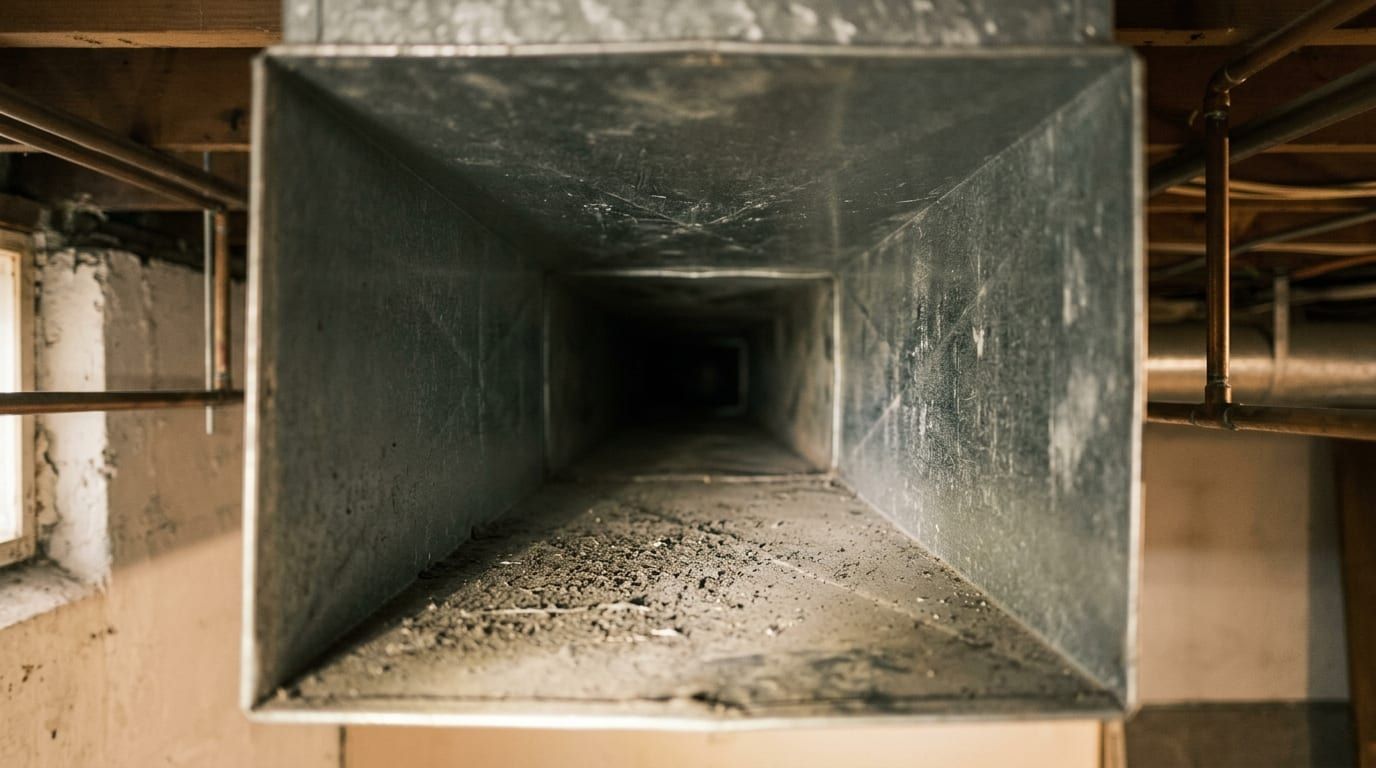
Air duct cleaning is worth paying for in three situations: visible mold growing on the sheet metal inside the ducts, the ducts infested with rodents or insects, or dust and debris built up heavily enough that you can see it coming out of a supply register. Outside of those three, the U.S. Environmental Protection Agency has said plainly that duct cleaning has never been shown to prevent health problems, and there is no evidence that an ordinary coating of household dust in a duct run does anything to the air a family breathes. If nobody has looked inside your ducts and named one of those three problems, a cleaning is a guess dressed up as a service — worth settling with a look inside the ductwork before anyone pays for the job itself.
What the service actually covers
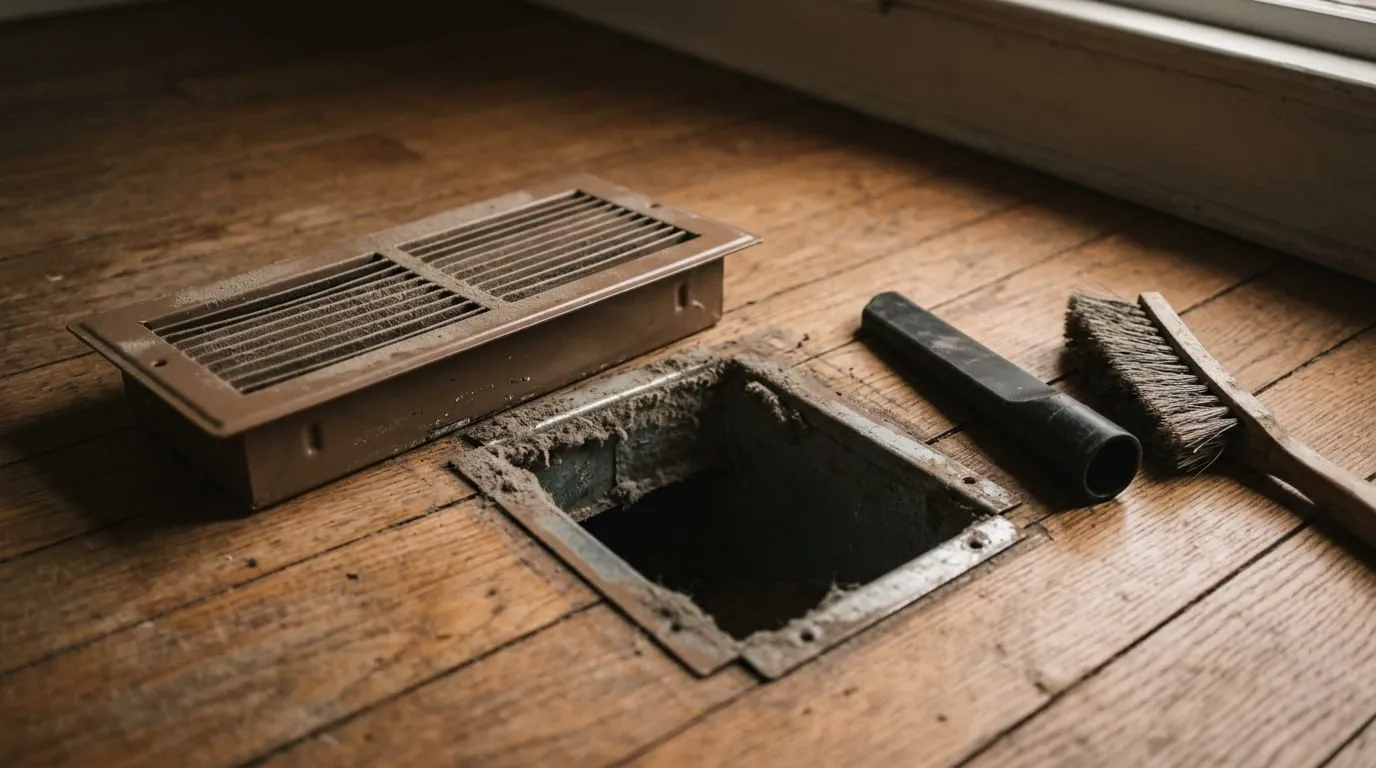
Air duct cleaning means agitating and vacuuming the inside of the forced-air system — the supply and return runs, the registers, the trunk line, and the blower compartment where the air handler sits. It does not mean the dryer vent, a separate run to the outside with its own fire-safety stakes and its own service on this site. It also does not mean fixing a duct that is disconnected, crushed, or undersized — that is repair work, and mixing the two into one job is how a homeowner pays to have dust vacuumed out of a duct that was never going to move enough air anyway.
- The supply and return duct runs, wherever a technician can reach them
- Registers and grilles — the metal you can unscrew and look through
- The main trunk line and plenum near the furnace or air handler
- The blower compartment, if the cabinet opens without cutting into anything
Why we do not put this on a schedule
The EPA’s own guidance here is unusually direct: duct cleaning has never been shown to actually prevent health problems, and a light amount of household dust in a duct is not an established health risk on its own. The agency does not recommend routine cleaning — its position is cleaning as needed, not cleaning on a calendar. A yearly duct-cleaning postcard is a marketing decision, not a maintenance one. Most of what settles in a duct over a normal year in a normal Somerset County house is the same ordinary dust that settles on a bookshelf, and moving it out of the ductwork does not do much for a room that still has dust on the furniture. If a technician says every duct needs cleaning every year regardless of what is inside them, that claim is not coming from the EPA’s standard — it is coming from a sales script.
The three situations where it earns its cost
Those first three are the EPA’s own list, and a fourth belongs on it for Somerset County’s low-lying ground. Basements along the Raritan near Manville have flooded badly enough three times in the last quarter-century to leave a public record — the river gauge there read 27.66 feet during Hurricane Ida in 2021, its highest crest in over a century of measurement. Ductwork that sat through water like that is not a judgment call; it picked up whatever the flood carried, and running the system pushes that into the house. Outside of mold, pests, visible debris, and an actual flood, a system doing its job quietly does not need anyone inside it — and a technician willing to say that before quoting anything is worth more than one who is not.
- Mold visibly growing on the metal, not merely a musty smell
- A rodent or insect problem confirmed inside the ducts
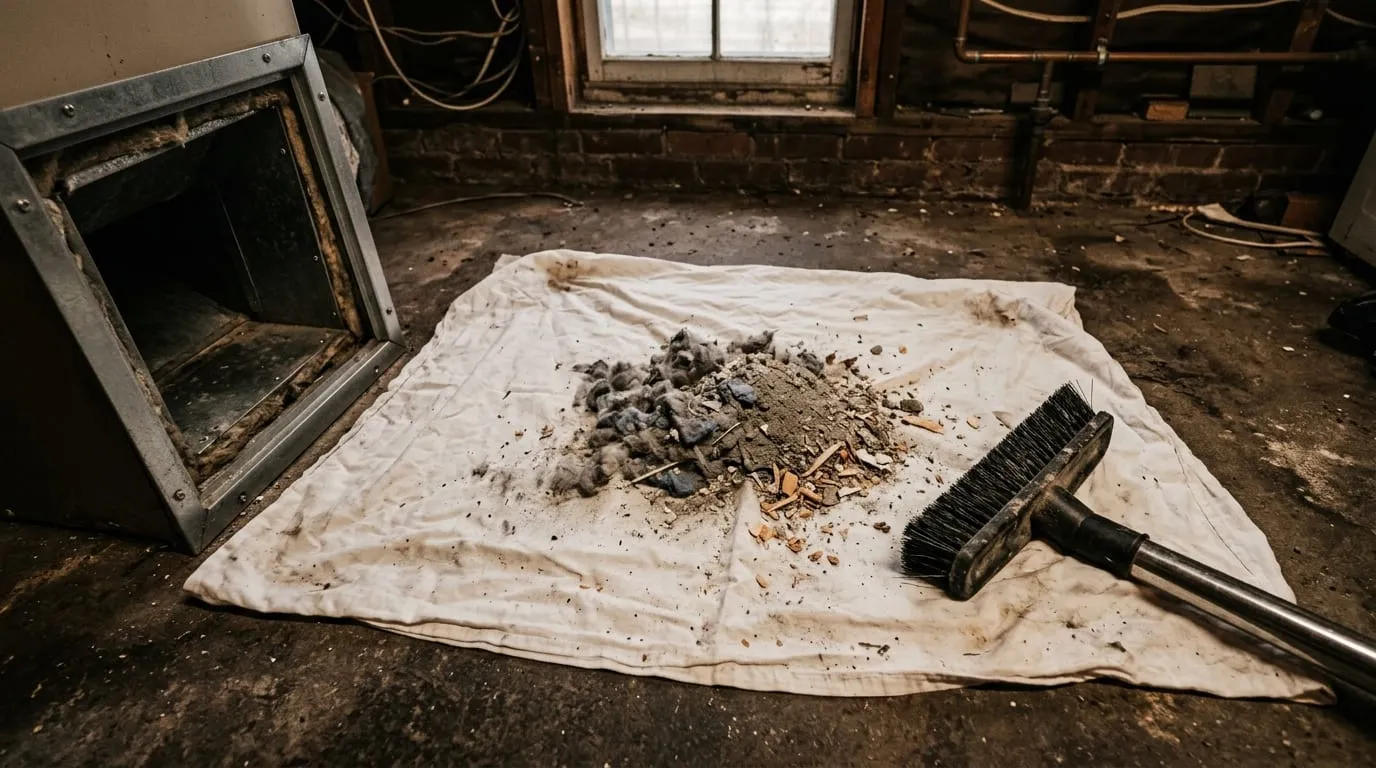
- Dust and debris heavy enough to visibly blow out of a register
- Ductwork that sat through standing water, most often a flooded basement
What cleaning will not fix
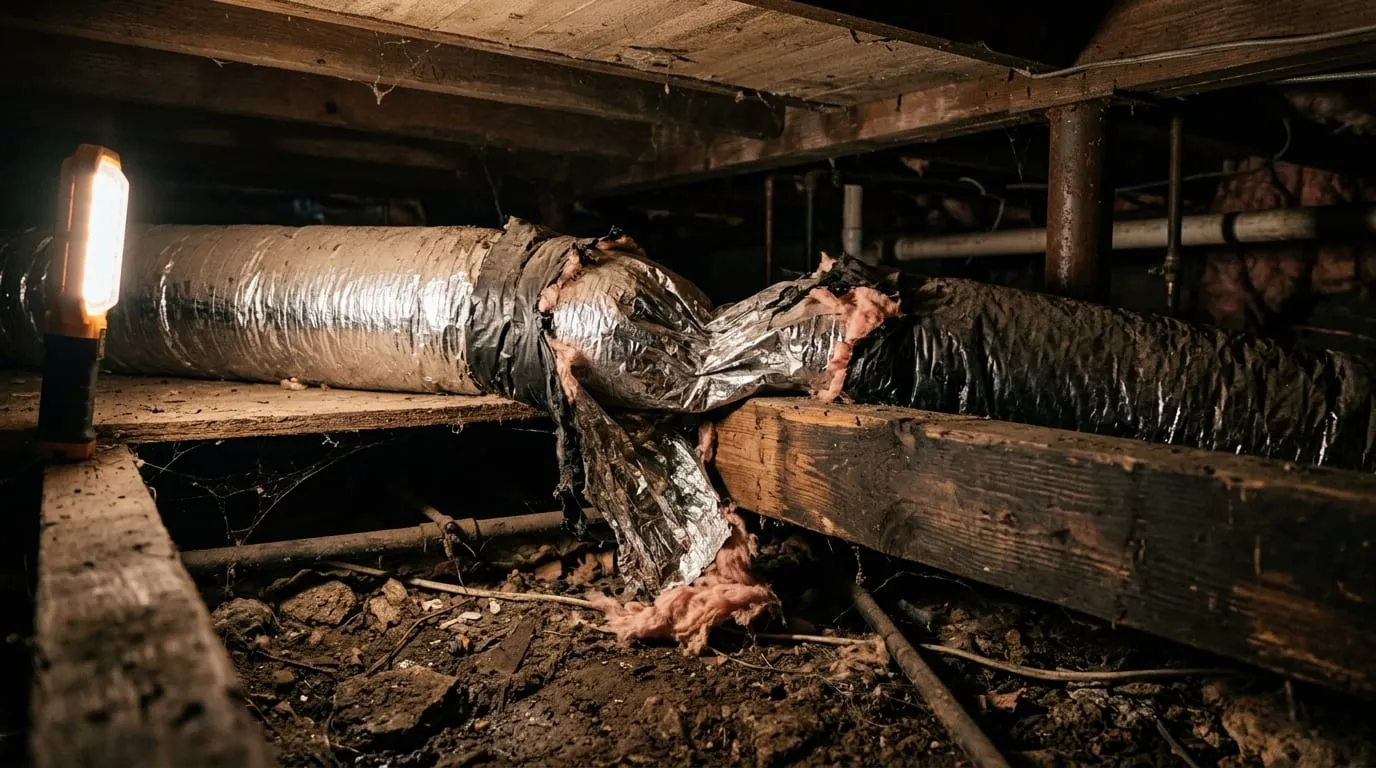
Bridgewater Township’s own housing tells the story: about seven in ten of the township’s homes went up between 1960 and 1999, the exact stretch when forced-air systems and their ductwork became the standard way to heat and cool a New Jersey house. That ductwork is now decades into its working life, and the failures showing up in it — a flexible run crushed under someone’s foot in a crawlspace, a joint pulled apart at a joist, a trunk sized for a floor plan the house no longer has — are structural, not dirty. Cleaning a crushed duct gets the dust out of a pipe that is still crushed. The room that never quite gets warm or cool is still sitting there afterward, because the actual defect was never in the dust to begin with. That is a repair or a replacement, not a cleaning.
How we look before anyone cleans anything
The industry’s own standard for this work — the ACR standard published by the National Air Duct Cleaners Association, updated in 2025 — puts assessment before cleaning as a matter of sequence: inspect first, establish what is actually in the system, then clean, then verify the result. That is the order we work in. On a service call in a Bridgewater or Somerset County home, that means opening a register or two and looking, not quoting a whole-house price over the phone before anyone has seen the ductwork. New Jersey’s own construction code treats ordinary duct repair and replacement as routine maintenance rather than permitted work — N.J.A.C. 5:23-2.7(c)5iii says so plainly. Cleaning carries even less regulatory weight. The only thing that should decide whether it happens is what is actually inside the ducts.
Air duct cleaning questions, answered straight
Will duct cleaning get rid of a musty smell in my house?
Sometimes, but often no. A musty smell as easily comes from a damp AC coil, a humidifier, or a wet crawlspace. Cleaning ducts that are not the real source will not touch it.
Does duct cleaning help with allergies or asthma?
There is no EPA finding that it does. The agency states duct cleaning has never been shown to prevent health problems, and other indoor sources — cooking, cleaning, pets, smoking — matter more than dust in a duct.
What are the real signs that my ducts need cleaning?
Visible mold on the metal, a confirmed rodent or insect problem, or dust heavy enough to blow out of a register when the system runs. Absent one of those, or a flood, there usually is not much to find.
Is air duct cleaning the same service as dryer vent cleaning?
No. A dryer vent is a separate, shorter run straight outside, and a blocked one is its own fire-safety issue. Air duct cleaning is the forced-air heating and cooling system — different runs, cleaned for a different reason.
A company offered a whole-house duct cleaning for a flat price with no inspection. Is that normal?
It is common, but not how the industry’s own inspect-first standard works. A price quoted before anyone looks inside the ducts is a guess, not an assessment.
Will cleaning fix a duct that is crushed, disconnected, or too small for the room it feeds?
No. Those are structural problems — repair or replacement work. Cleaning a damaged duct just removes dust from a pipe that still has the same airflow problem afterward.
Not sure your ducts even need it?
Tell us what you are actually seeing — a room that never gets quite warm or cool, dust around a register, or ductwork that sat through last month’s storm — and we will tell you plainly whether that is a cleaning, a repair, or nothing at all.
Where this leads next
Air Duct Cleaning
The service this article is actually about, including what we check for before we ever recommend it.
See the serviceDuct Repair & Replacement
Crushed, disconnected, or undersized runs are a structural problem, not something a cleaning can reach.
See the serviceDryer Vent Cleaning
A separate system with its own fire-safety stakes, cleaned for a different reason than the ductwork.
See the service